
A few thoughts on ApoB by Tucker Goodrich

A few thoughts on ApoB
It's something we're programmed for, genetically. It's a fundamental component of digestion and energy distribution. (Dave Feldman - @realDaveFeldman)
So if it causes CVD, then CVD is a genetic disease.
#lcl6 h/t @jimolsen717
If CVD is genetic, then we should see the current rate of CVD (~50% of deaths) in all human populations. We don't. This is demonstrated repeatedly, best here:
Where various genetic populations have near-zero CVD in their natural environment.
Tracking the spread of an industrial disease:
— Tucker Goodrich (@TuckerGoodrich) March 28, 2017
"Geographic Pathology of Myocardial Infarction"https://t.co/JeLMIff0jG@ProfTimNoakes
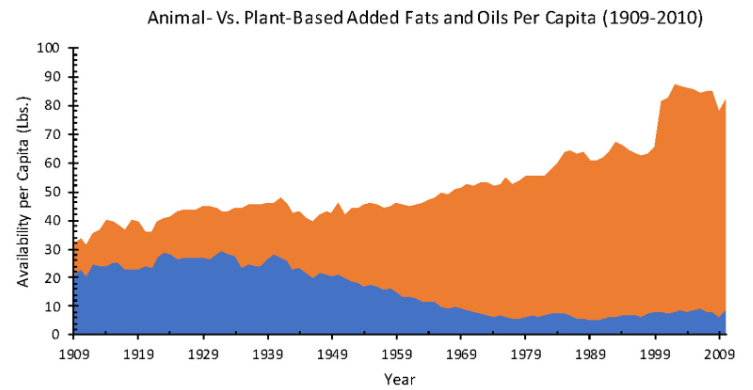
We only see CVD in populations consuming higher amounts of linoleic acid, and, best, low levels of animal fats.
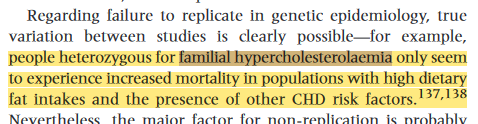
There are various confounders that affect this, like smoking, pollution, or FH, but all do so though that variable.
So it seems, clearly, that when linoleic acid is low, ApoB is not harmful. Populations with ApoB levels higher than US levels, for instance, but no industrial seed oil consumption, have near-zero rates of CVD.
Yes, @FatEmperor and I went through this a while back. Kitavans and Tsimane both have ApoB that's higher, and no CVD.https://t.co/4jnztj1XUG
— Tucker Goodrich (@TuckerGoodrich) July 27, 2021
Linoleic acid (LA) itself, however, isn't a problem. It's only when it becomes oxidized that it's a problem.
This is roughly like saying spilled gasoline in a match-testing facility isn't a problem...

Since it's going to get oxidized, sooner or later. We know that eating LA leads to increased oxidized LA in the body, as we can measure a carrier of LA, LDL. LDL with oxidized LA is called oxLDL.

ApoB is just a protein, you have quadrillions of them in your body right now. LDL contains one ApoB, as do some other things in your body.
When LA gets oxidized, it attaches to and oxidizes the ApoB in LDL—along with everything else in the neighborhood.
This is why ApoB is such a poor risk marker.
Along with those populations that don't have CVD, it's a poor indicator for CVD risk even in populations that have high LA consumption.
It's not causing it, it's just a vehicle.
Physicians and scientists who have been following the science for the last few decades are figuring this out.
Yep.
— Tucker Goodrich (@TuckerGoodrich) August 4, 2021
"Interpretation: ApoB particles not atherogenic unless oxidized" https://t.co/EGS4EV7jDY
If you're curious, while consuming LA to prevent CVD is still recommended by certain Stone-age physicians and professional organizations, LA increases ApoB.
Worried about your ApoB?
— Tucker Goodrich (@TuckerGoodrich) November 9, 2022
"The high LA group showed greater increases in apolipoprotein B (apoB) and oxidized low-density lipoprotein (ox-LDL) than those in the low LA group."#lcl6
And yes, the oxidized LA that you eat is delivered throughout your body, causing all sorts of mayhem.
Important part is that we know know where that oxidation is happening... In the gut/blood stream. Not in the intima.
— Tucker Goodrich (@TuckerGoodrich) September 22, 2022
"Oxidized lipids in the diet are a source of oxidized lipid in chylomicrons of human serum."https://t.co/t4pflH3Ym7 pic.twitter.com/cyjnhWu41R
Including to your arteries, to give you CVD.
2/2 "Identification of lipoproteins of intestinal origin in human atherosclerotic plaque"https://t.co/RfMI7LBff6
— Tucker Goodrich (@TuckerGoodrich) February 25, 2023
Oxidized fats from seed oils is the definition of oxidized LDL, delivered from the gut to the intima.
Written by Tucker Goodrich
Published April 22nd, 2023
Twitter: @TuckerGoodrich
Blog: Yelling Stop
Reflections on barefoot-style running, healthy diets, and moving in the right direction.
YouTube: @TuckerGoodrich0
Original thread on Twitter by Tucker Goodrich
Recommended reading and products (affiliate links)
Nina Teicholz
Dr Malcolm Kendrick
Tim Noakes, Jonno Proudfoot, Sally-Ann Creed
Phillip Ovadia MD
Take Control of Your Health Journey
If you struggle with cravings or need accountability, I run two Zoom group sessions per week...
Legal stuff:
The content in this blog and the entire site is not a substitute for professional medical advice, diagnosis, or treatment. Always seek medical advice from your physician or other qualified health professional before making any changes to your diet, medication, or exercise.
We use affiliate links for some of the recommended products to help towards keeping this page online.